What Is Moola and How Does It Work?
Built for everyone who says "I'll invest when." Here's what Moola does, what it costs, and who it isn't for.
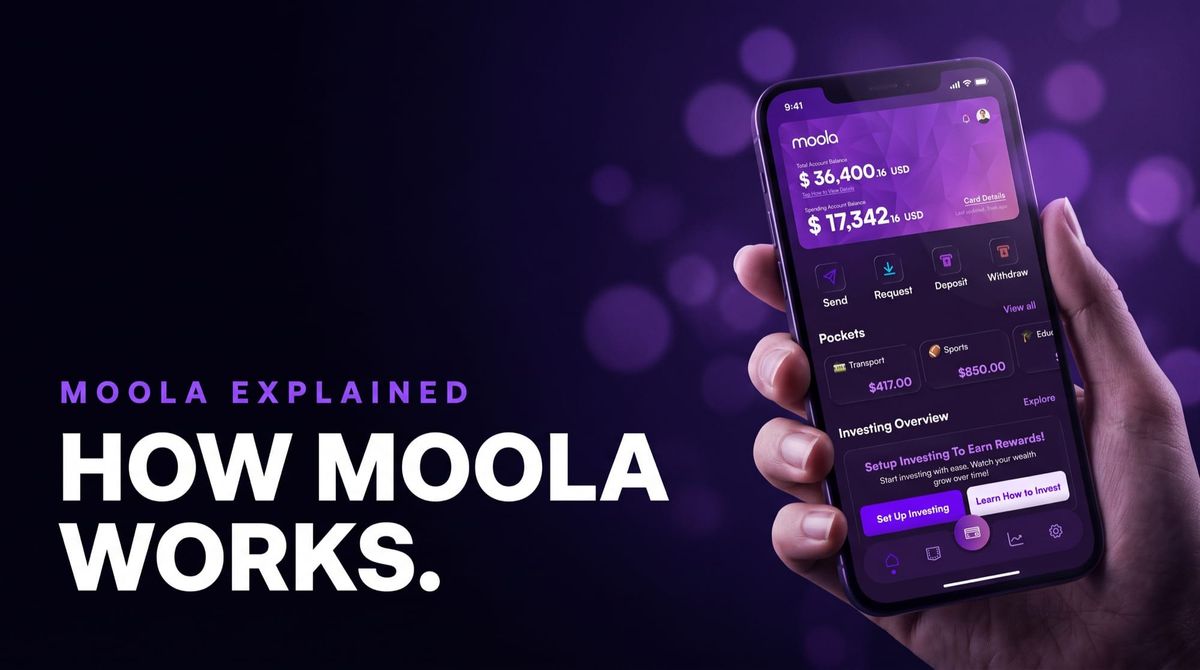
Moola is an investing app for everyone who says "I'll invest when." When the kids are a little older. When the raise comes through. When school's finished. It's made by Moola Copilot LLC, an SEC-registered investment adviser founded by Jason and Magda Schappert, and it's built on a simple idea: you don't need a new habit, because you already have one. You're good at spending. Moola turns that into investing. This page explains what it does, what it costs, who it suits, and just as importantly who it doesn't.
The problem isn't knowledge. It's "when."
Almost nobody decides they're against investing. What they say is "when."
- When the kids are a little older.
- When I get that raise.
- When I finish school.
- When things settle down.
You know someone like this. You might be someone like this. And the trouble with "when" is that it never actually arrives. Something else always turns up to spend the money on, and the version of you who was going to start investing stays permanently a few months away.
It's easy to read that as a discipline problem. It usually isn't. Investing has traditionally asked you to build an entirely new habit out of nothing, on top of a life that's already full, and new habits are exactly the thing most of us are worst at.
Moola's answer: use the habit you already have
Here's the part that makes Moola different from most investing apps. It isn't asking you to become a new person.
You're already excellent at spending. Everyone is. It happens without planning, motivation or a reminder. So rather than fighting that, Moola is built to sit on top of it, turning everyday spending into a way of putting money toward your future rather than a reason you never got started.
That's the shift worth understanding. Most tools ask what you can cut. This one starts from what you already do.
The founders came at this from an unusual direction. Jason and Magda Schappert spent years building and eventually selling an aviation training business, teaching complicated material to people starting from zero. Moola applies that same instinct to money: assume the person is smart, assume nobody ever taught them this, explain it plainly.
How Moola actually works
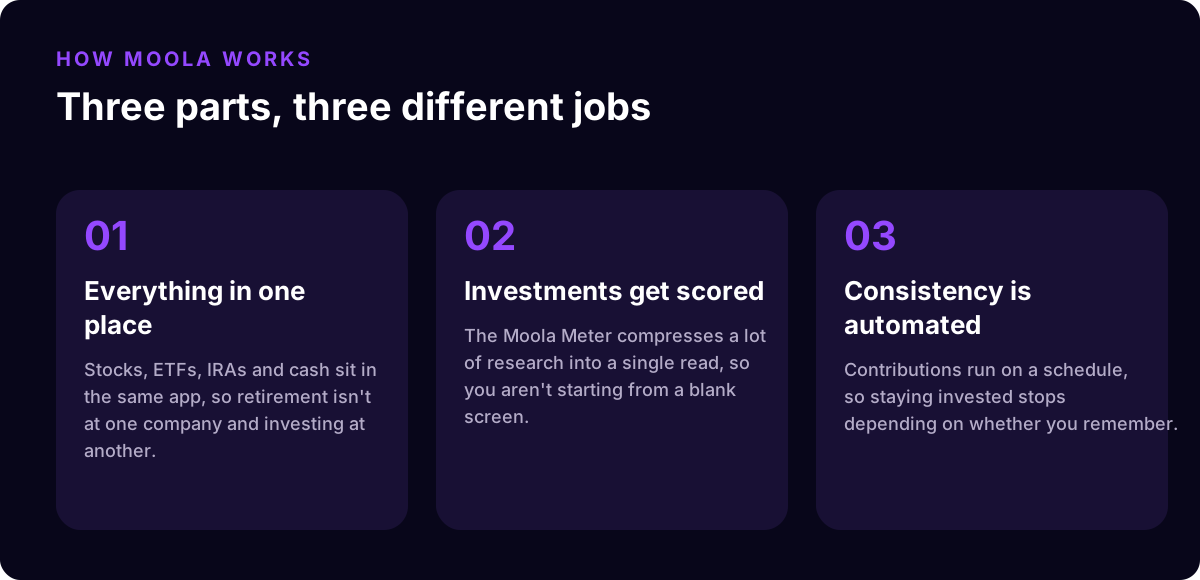
There are three pieces worth understanding.
You can hold most of the basics in one place. US stocks and ETFs, Traditional and Roth IRAs, and cash all sit in the same app, so your retirement account isn't at one company and your investing at another.
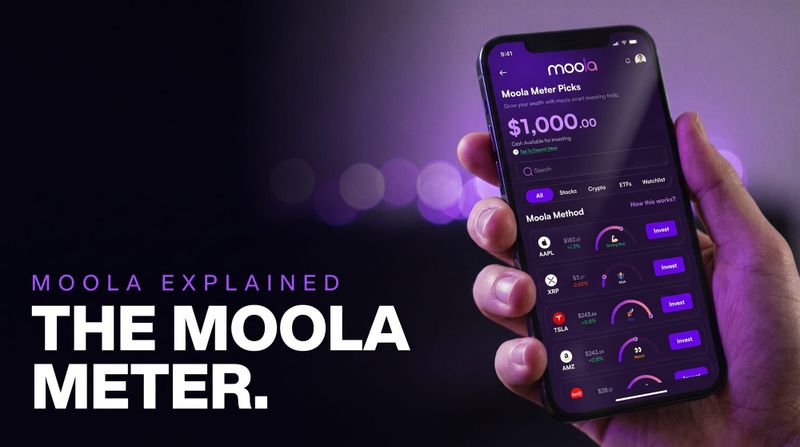
Investments get scored, not just listed. This is the Moola Meter, covered below. Rather than handing you a screen of tickers and wishing you luck, the app gives you a read on what you're looking at.
Consistency can be automated. You can set contributions to run on a schedule so investing doesn't depend on you remembering. This matters more than most beginners expect, because the habit tends to drive the outcome more than the individual picks do.
What is the Moola Meter?
The Moola Meter scores every investment across 52+ factors and hands you back one simple number. No charts to decode. No jargon to Google. Just: is this a good investment or not?
It's worth being precise about what a score is and isn't. It's a research shortcut, a way of compressing a lot of information into something you can read in a second. It is not a prediction, and it isn't a recommendation to buy. Nothing can tell you what an investment will do next. What a score can do is stop you from having to become an analyst before you're allowed to begin.
What is SOPHIA?
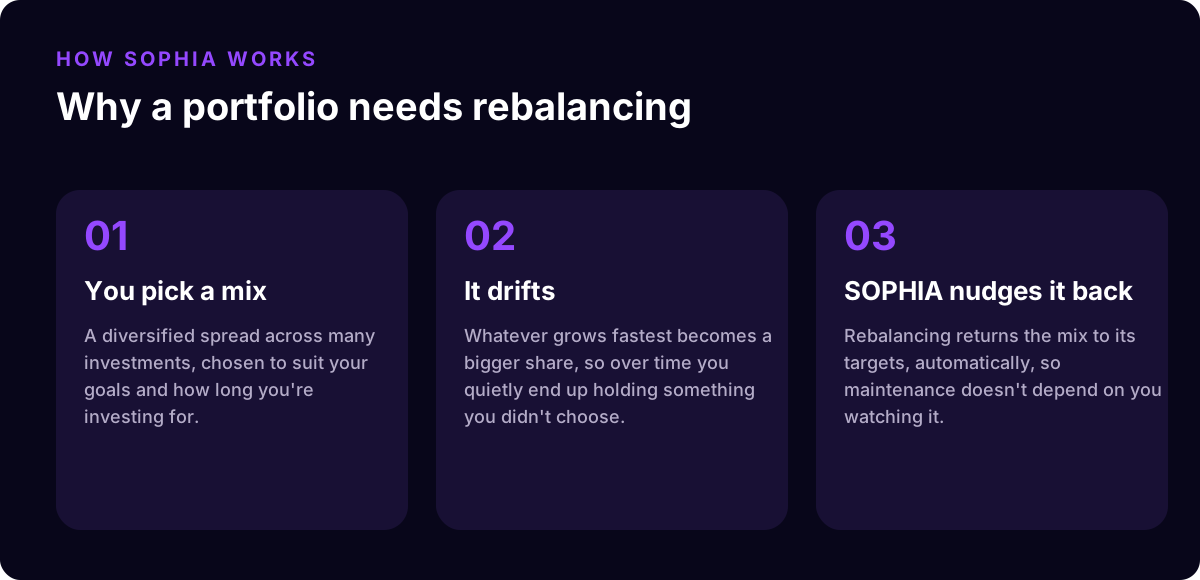
SOPHIA is Moola's automated investing feature. Rather than asking you to build a portfolio and maintain it, it puts together a diversified mix and rebalances it over time as things drift away from their targets.
Rebalancing is one of those words that sounds more complicated than it is. If you set out to hold a certain mix and one part grows faster than the others, your mix quietly stops being the one you chose. Rebalancing nudges it back. Doing it by hand means watching and adjusting; automating it means you don't have to.
This is the part that suits people who genuinely don't want to manage anything. You're still the one deciding to invest and how much. The maintenance is handled.
Is Moola legitimate and regulated?
A fair question, and one you should ask of any app that touches your money.
Moola Copilot LLC is registered with the SEC. Registration isn't a performance guarantee and doesn't mean an investment can't lose value, so treat anyone who implies otherwise with suspicion. What it does mean is that the firm operates under a regulatory framework with disclosure obligations and oversight.
Moola is a financial technology company, not a bank. Where banking features are involved they're provided through partner institutions, and the specific disclosures for those appear in the app.
The honest way to evaluate any investing app is to check three things: who holds the money, what the fees are, and whether you can get your money out. Those answers should be easy to find. If a company makes them hard to find, that's the signal.
How does Moola make money?
Worth asking of any financial app, because the answer tells you whose interests the product is built around.
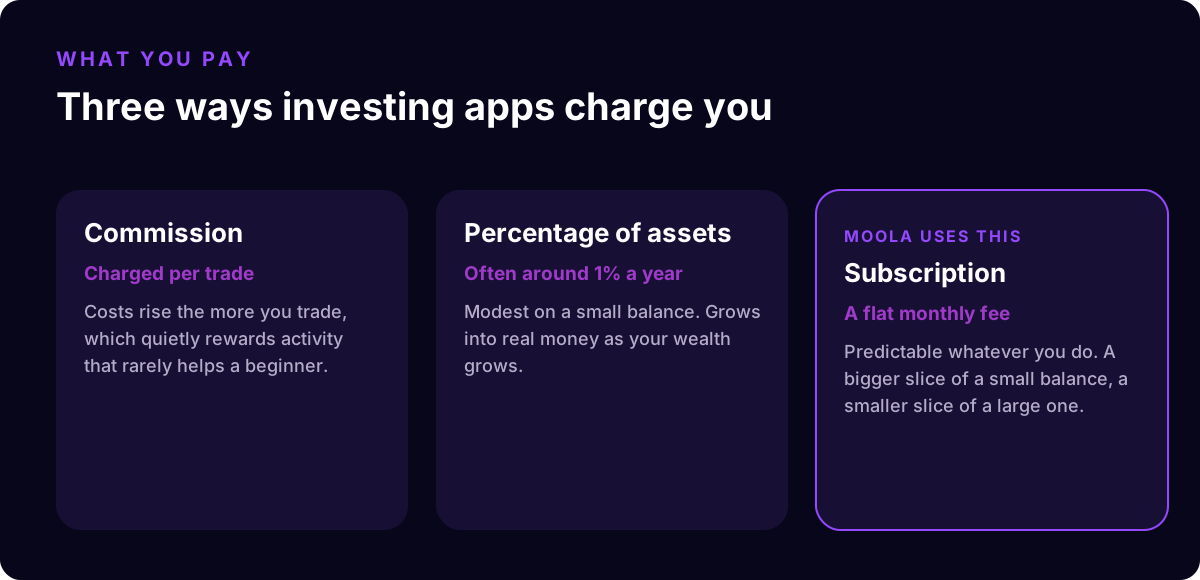
There are broadly three models. Commissions charge you per trade, which quietly rewards the company when you trade more, even though trading more rarely helps a beginner. Percentage of assets is what traditional advisers charge, often around 1% a year, which stays modest on small balances and grows into real money as you build wealth. Subscription is a flat monthly fee regardless of activity.
Moola uses the subscription model. The practical effect is that the company doesn't earn more when you trade more, so there's no built-in reason to nudge you toward activity. The tradeoff runs the other way: a flat fee is a larger proportion of a small balance than of a large one, so if you're starting with very little, work out what the monthly cost represents against what you're investing.
That arithmetic is worth doing with any app, including this one. A company that's straightforward about how it earns is easier to evaluate than one that buries it.
What Moola deliberately doesn't do
It isn't a trading terminal. There's no options chain, no advanced charting suite, no day-trading tooling, and that's a design decision rather than a missing feature. Tools that make rapid trading easy tend to make beginners poorer, and the app is built around the opposite behaviour: steady contributions, diversification, and leaving things alone.
It also won't tell you what will happen next, because nothing can. A score summarises what's knowable now. It doesn't forecast.
Who Moola is for, and who it isn't
It's a reasonable fit if you've been meaning to start investing and haven't, if you want retirement and regular investing in one place, if you'd rather automate contributions than rely on discipline, or if you want to understand what you own instead of copying someone's tip.
It's probably not for you if you're an active trader who wants advanced charting and options, if you want to pick individual stocks based on your own research and find scoring unnecessary, or if you need money you'll be spending in the next few months. Money you need soon generally shouldn't be invested at all, whichever app you use.
Being clear about the second list matters. An app that claims to suit everyone is telling you something about its marketing, not its product.
What does Moola cost?
Moola runs on a subscription rather than charging commission per trade, which means the cost is predictable instead of scaling with how often you invest. Current pricing is shown in the app and on the Moola website, and it's worth comparing against what you'd pay elsewhere, including tiered subscriptions at other beginner apps and the percentage-of-assets fees traditional advisers charge.
The general rule with any investing app: know what you're paying and what you're getting. A few dollars a month is meaningful when you're investing small amounts, and less meaningful as your balance grows. Do that arithmetic for your own situation.
How to get started
- Download the app and open an account. Expect identity verification, which is a legal requirement for any US investment account, not the company being nosy.
- Start with an amount you won't need soon. Small is fine. Starting is the hard part.
- Set up a recurring contribution, even a small one, so consistency isn't a weekly decision.
- Use the education content as you go. You don't need to understand everything before you begin, but you should understand a little more each month.
If you're still working out what to put money into, we wrote a plain-English guide to what to invest in when you know nothing about stocks, and a simpler one on the easiest way to start as a beginner.
This article is educational and not investment advice or a recommendation to buy or sell any security. Investing involves risk, including the possible loss of principal. Consider your own circumstances, and speak with a licensed financial professional for personalized guidance.
Want to see how it works? Download Moola and start with whatever you've got.
Frequently asked questions
What is Moola?
Moola is an investing app from Moola Copilot LLC, an SEC-registered investment adviser founded by Jason and Magda Schappert. It combines stocks, ETFs, IRAs and cash in one app, scores investments through the Moola Meter, and can automate your contributions so investing doesn't depend on remembering.
Is Moola legit?
Moola Copilot LLC is registered with the SEC, which means it operates under a regulatory framework with disclosure obligations. Registration is not a guarantee against loss. As with any investing app, check who holds your money, what the fees are, and how easily you can withdraw. We wrote a full guide on exactly this: Is Moola Legit? What SEC Registration Actually Means.
What is the Moola Meter?
It scores every investment across 52+ factors and returns one simple number, so you can read a position at a glance instead of interpreting charts. It's a research shortcut, not a prediction or a recommendation to buy.
How much does Moola cost?
Moola charges a subscription rather than per-trade commissions, so the cost is predictable regardless of how often you invest. Current pricing is listed in the app and on the Moola website.
Does Moola manage my investments for me?
It can. SOPHIA builds a diversified mix and rebalances it over time so you don't have to maintain it yourself. You still decide whether to invest and how much.
Can I open a retirement account with Moola?
Yes. Both Traditional and Roth IRAs are supported, so retirement investing can sit alongside your regular investing in the same app rather than at a separate company.