How Much Money Do You Really Need to Start Investing?
About $5, thanks to fractional shares. The real requirements are a cash cushion, no expensive debt, and a schedule you'll actually keep.

You need far less money to start investing than most people think. Thanks to fractional shares, you can begin with $5, because you're buying a slice of a share instead of the whole thing. The real requirements aren't about the amount at all: a small cash cushion for emergencies, no high-interest debt eating you alive, and honesty about when you'll need the money back. Get those right and a $5 start beats a $5,000 start that never happens. The amount you begin with matters far less than whether you keep adding to it, and this article walks through both halves properly.
Why do people think they need thousands to start?
Because for most of investing history, they did. Full shares of well-known companies often cost hundreds of dollars each, brokers charged commissions per trade, and account minimums shut out anyone starting small. The image stuck: investing was a rich person's room, and the door had a cover charge.
That world is gone. Commissions at mainstream apps went to zero, minimums collapsed, and fractional shares ended the tyranny of the share price. But the belief outlived the barriers, and it still keeps people waiting for a someday pile of money that never quite arrives. If you've been waiting to feel rich enough to start, this is your permission slip: the door charge was removed years ago.
What are fractional shares, in plain English?
A fractional share is exactly what it sounds like: a piece of one share. If a share of a company or fund costs $400 and you have $10, you can own one fortieth of a share. Your slice rises and falls exactly like the whole share does, proportionally.
This matters for two reasons. First, no investment is out of reach while you're starting small. Second, and more importantly, small amounts can still be spread across many investments. Diversification, owning many things so no single one can sink you, used to require real money. Fractional shares made it possible on a lunch budget.
What should you have in place before your first dollar?
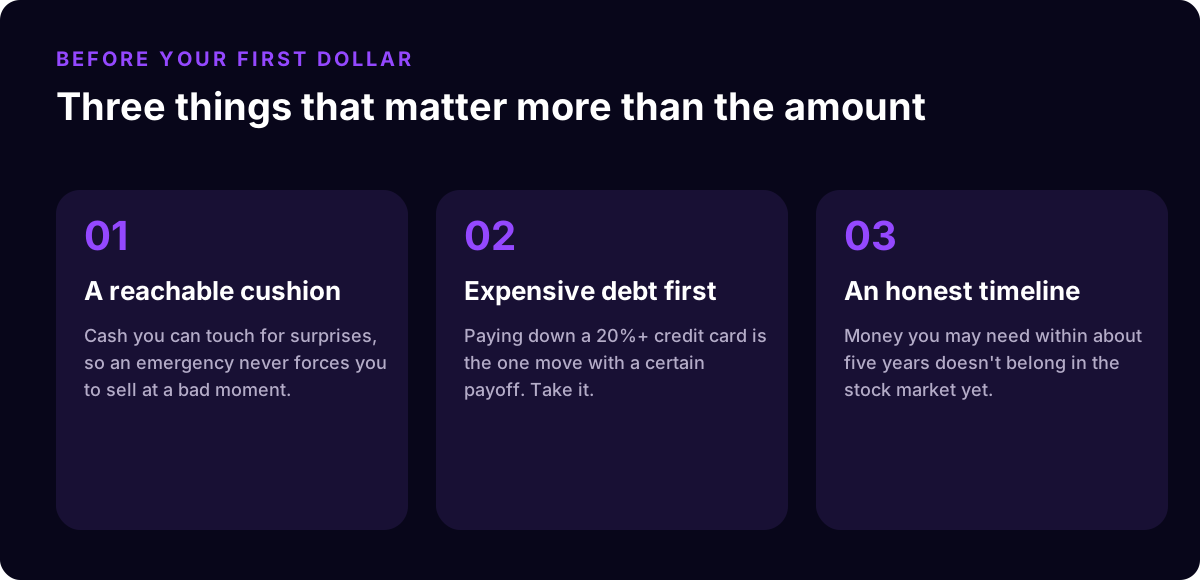
Three things, and they matter more than the starting amount ever will.
- A cash cushion you can reach. Some money set aside for the surprise car repair, so an emergency never forces you to sell investments at the worst moment.
- No high-interest debt in charge. A credit card charging 20%+ works against you harder than markets work for you. Paying it down is the one financial move with a certain payoff.
- Honesty about your timeline. A common guideline: money you might need within about five years doesn't belong in the stock market, because you could be forced to sell during a downturn.
How big should the cushion be? Forget the intimidating six-months-of-expenses target for now; that's a destination, not an entry requirement. Even a few hundred dollars of reachable cash absorbs the most common emergencies, and you can keep building it alongside your investing rather than before it. The requirement isn't a full fortress. It's enough buffer that a flat tire never touches your investments.
None of this is exciting. All of it is why some people's investing survives a bad year and other people's doesn't.
Why does the schedule matter more than the amount?
Because a start is a transaction, and a schedule is a system. Someone who invests $500 once has made a purchase. Someone who invests $10 every Friday has built a machine that keeps going when motivation doesn't, buys through good weeks and bad ones without trying to time either, and grows the habit alongside the balance.
Investing a set amount on a set schedule even has a name, dollar-cost averaging, but the name matters less than what it removes: the need to ever decide whether now is a good time. You'll buy at various prices and land somewhere in the middle, with zero decisions spent.
That's the entire idea behind $5 Fridays, the habit thousands of Moola members run: a small, almost unnoticeable amount, set aside every single week, automated so it doesn't depend on remembering.
So what does a realistic start actually look like?
Something like this: keep your cushion, pick an amount so small it's boring, $5, $10, $25 a week, whatever you genuinely won't miss, automate the transfer, and put it into something broadly diversified rather than one hot stock. Then leave it alone and let the habit compound into bigger contributions as your income grows.
Notice what's missing from that plan: courage, timing, and a big number. A start that requires any of those is a start that keeps getting postponed. Boring is the feature.
What does waiting actually cost?
Count it in contributions, because that's the part you control. Ten dollars a week is $520 set aside in a year. Waiting until you can afford a someday number, say $5,000 saved up first, routinely takes years, and every one of those years is another $520 that never entered the habit. The person who starts small doesn't just have a head start in money set aside. They have a head start in being the kind of person who invests weekly, and that identity is the actual asset.
There's a reason every seasoned investor gives beginners the same unglamorous advice: the best time to start was earlier, the second-best time is with whatever you have now. Nobody says wait until it's impressive.
The common excuses, answered honestly
- "It's not worth investing such a small amount." The amount isn't the point yet. You're installing a system, and systems scale. $10 habits become $100 habits when income grows; nonexistent habits stay nonexistent.
- "I'll start when the market calms down." Markets don't send calendar invites. A schedule removes the timing question entirely, which is precisely why it works.
- "I need to learn more first." Reasonable, and also the most common permanent delay in personal finance. Start small while you learn. Five invested dollars teach more than fifty saved articles.
- "I'm embarrassed to start this small." Nobody can see your balance. Everybody can see decades of waiting.
Where does Moola fit in?
Moola was built for exactly this kind of start. Fractional investing means your $5 goes wherever it should, not just wherever is cheap. The Moola Meter scores every investment across 52+ factors and hands you back one simple number, so choosing your first investments doesn't require a finance degree. And if you'd rather not choose at all, SOPHIA automates the portfolio and keeps it balanced over time.
If you're starting from absolute zero, we also wrote the easiest way to start investing as a beginner and what to invest in if you know nothing about stocks. Same voice, same honesty, no jargon.
And if the number that finally gets you moving is even smaller than $5, fine. The dollar amount of your first contribution will be a rounding error in your financial life. The date of it won't be. Years from now, the only detail that will matter about your start is that it happened, on a week like this one, with whatever you had.
This article is educational and not investment advice or a recommendation to buy or sell any security. Investing involves risk, including the possible loss of principal. Consider your own circumstances, and speak with a licensed financial professional for personalized guidance.
Got $5 and a spare minute? Download Moola and set up a weekly amount so small it's boring. Boring is how this works.
Frequently asked questions
Can I start investing with $5?
Yes. Fractional shares let you buy a slice of a share instead of the whole thing, so $5 can be invested, and even spread across a diversified fund. The amount matters far less than building the habit of adding regularly.
Is investing $10 a week actually worth it?
Yes, because you're building two things at once: a balance and a system. The weekly habit removes timing decisions, survives low-motivation weeks, and scales naturally as income grows. A small schedule beats a large intention that never starts.
Should I pay off debt before I start investing?
High-interest debt, like credit cards at 20% or more, usually comes first, because paying it down is a certain improvement no investment can promise to match. Lower-interest debt is more of a judgment call about your own comfort and timeline.
Do I need a lump sum to make investing worthwhile?
No. Regular small contributions on a schedule are how most successful ordinary investors actually operate. A set amount on a set date removes the pressure to time the market and lands your buying somewhere in the middle of prices.
What if I might need the money back soon?
Then it probably shouldn't be in the stock market yet. A common guideline is that money you may need within about five years belongs somewhere stable, because being forced to sell during a downturn turns paper losses into real ones.